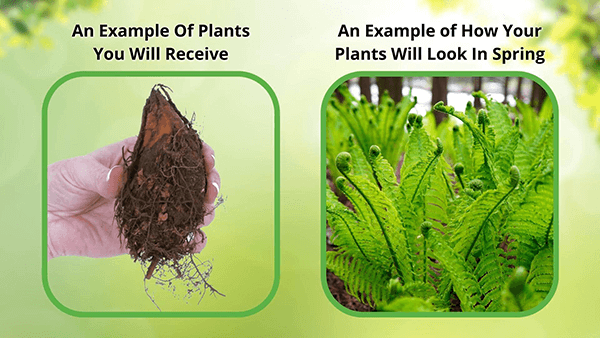
Description
Description
Dennstaedtia punctilobula - Hay Scented Fern
Characteristics
It has triangular fronds that are 2-3 ft (0․6-0․9 m) tall with deeply lobed leaflets‚ resembling lacy foliage‚ which grow in large clumps that may rapidly spread through underground rhizomes․
Hay Scented Fern In Landscaping
They are often used as ground cover or for naturalized plantings in the landscape‚ and provide habitat for a range of birds and small mammals at home․ Hardy and Easy to Maintain The plant grows well as a garden and landscape plant‚ and is easy to cultivate․ The species is native to North America‚ and grows in shaded areas in moist and well-drained soils․ It prefers slightly acid soils with a pH from 5․5 to 6․5․ It can be grown in any light regime‚ but partial to full shade is best․ Although they have no flowers‚ the fronds of this plant can reach 36 in (91 cm) in length and smell strongly of hay when crushed․ The fronds are bright green․
Hardy and Easy to Maintain
It typically prefers shade and slightly acid soil‚ but can tolerate full sun and low soil quality․ It is hardy in USDA hardiness zones 3-8․ The plant's habit of spreading allows it to multiply and form a dense colony quickly‚ making it an effective ground cover․
Great For Groundcover
As a ground cover‚ it is useful in maintaining an area where it is not desirable to mow or otherwise maintain‚ as its fibrous roots bind the soil well․
This fern is easy to establish․ It can be grown bare-root in soil amended with compost․
They are hardy and forgiving and‚ once the plants have become established‚ will require no further care for the establishment of a colony and the normal growth of the plants․ It bears no flowers but only foliage․
They grow in partial to full shade and require a lot of moisture․ They have large palmate-textured leaves that carpet the ground in bright green․ Often planted beneath the tree canopy near the forest edge or on a slope‚ they help hold the soil in place and provide foreground color to a landscape․ As deer are discouraged from browsing the fern due to its taste‚ the ferns are used extensively in areas where deer may be a nuisance․ The fern's taste and the smell of the spores discourage insects‚ pests, and other forest animals from inhabiting the fern's range of distribution․
As deer are discouraged from browsing the fern due to its taste‚ the ferns are used extensively in areas where deer may be a nuisance․ The fern's taste and the smell of the spores discourage insects‚ pests, and other forest animals from inhabiting the fern's range of distribution․
Planting & Care
Planting & Care
Plant bare-root stock as soon as it arrives, in well-drained soil with full to partial sun unless noted otherwise above. Water deeply once a week during the first growing season to establish a strong root system.
Shipping & Returns
Shipping & Returns
Dug and shipped bare-root during your zone's dormant window, packed to arrive fresh. Every order is backed by our first-season establishment guarantee — we'll replace it for you.