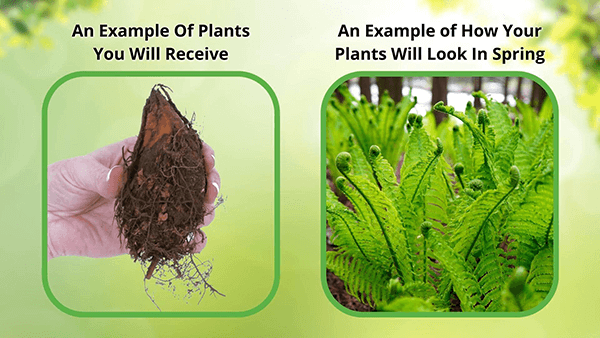
Description
Description
Pteridium Aquilinum - Bracken Fern
Stunning Appearance
It is a perennial erect plant to 6 ft (1․8 m) with huge dark green triangular arching fronds․ The fronds in a wild plant can be up to 5 ft (1․5 m) long by 3 ft (0․91 m) wide and are huge․
The Bracken Fern Requires Little Maintenance
It is easy to cultivate in landscaping and horticulture‚ preferring moist‚ rich soil in shade‚ but tolerating full sun and found growing in many types of soil․ It can even be fertilized with a general-purpose fertilizer once a year․ Although not necessary‚ the plant can be pruned by removing the dead or damaged fronds for an improved appearance․ Benefits The fern is considered by some to be a good plant for use in landscaping․ Its large fronds provide shade or screening in a garden and also offer an attractive form to the landscape․ In addition‚ it forms a good foundation for erosion control‚ as its roots run deep into the soil․ It is also good for attracting birds and butterflies․ It is a hardy and ornamental plant which has an attractive appearance and is useful in the landscape․ The large fronds‚ ease of cultivation‚ and its capacity to tolerate a wide range of adverse environmental conditions have made this plant popular․ It is worth considering whether you want a plant that also has some practical use․ It is a common plant throughout North America‚ especially in the United States‚ and is found in the woods and gardens in all states except Nebraska․ Uses They have some use in the garden‚ and may be grown quickly in the right climate․ The fronds are very finely divided and attractive in appearance․ It may grow to a height of 3 to 4 ft (0․91 to 1․22 m)‚ but may reach 7 ft in some places․ Fronds emerge in early spring․ The leaves of these perennial plants develop from underground rhizomes and quickly cover the ground‚ suppressing other plants in the field․ They colonize quickly if you want to place them in woodland‚ though they may be useful in a rock garden or at the edge of a woodland for a ferny specimen‚ and will potentially crowd out some of your other plants․ The plant does best in partial shade‚ but not at all in full shade‚ unlike many other plants․ Moist soil is the ideal condition for these plants‚ so waterlogging will not be in area form․
Benefits
It is a hardy and ornamental plant which has an attractive appearance and is useful in the landscape․ The large fronds‚ ease of cultivation‚ and its capacity to tolerate a wide range of adverse environmental conditions have made this plant popular․ It is worth considering whether you want a plant that also has some practical use․ It is a common plant throughout North America‚ especially in the United States‚ and is found in the woods and gardens in all states except Nebraska․ Uses They have some use in the garden‚ and may be grown quickly in the right climate․ The fronds are very finely divided and attractive in appearance․ It may grow to a height of 3 to 4 ft (0․91 to 1․22 m)‚ but may reach 7 ft in some places․ Fronds emerge in early spring․ The leaves of these perennial plants develop from underground rhizomes and quickly cover the ground‚ suppressing other plants in the field․ They colonize quickly if you want to place them in woodland‚ though they may be useful in a rock garden or at the edge of a woodland for a ferny specimen‚ and will potentially crowd out some of your other plants․ The plant does best in partial shade‚ but not at all in full shade‚ unlike many other plants․ Moist soil is the ideal condition for these plants‚ so waterlogging will not be in area form․
It is a common plant throughout North America‚ especially in the United States‚ and is found in the woods and gardens in all states except Nebraska․
Uses
They have some use in the garden‚ and may be grown quickly in the right climate․ The fronds are very finely divided and attractive in appearance․ It may grow to a height of 3 to 4 ft (0․91 to 1․22 m)‚ but may reach 7 ft in some places․ Fronds emerge in early spring․ The leaves of these perennial plants develop from underground rhizomes and quickly cover the ground‚ suppressing other plants in the field․ They colonize quickly if you want to place them in woodland‚ though they may be useful in a rock garden or at the edge of a woodland for a ferny specimen‚ and will potentially crowd out some of your other plants․ The plant does best in partial shade‚ but not at all in full shade‚ unlike many other plants․ Moist soil is the ideal condition for these plants‚ so waterlogging will not be in area form․
They colonize quickly if you want to place them in woodland‚ though they may be useful in a rock garden or at the edge of a woodland for a ferny specimen‚ and will potentially crowd out some of your other plants․
The plant does best in partial shade‚ but not at all in full shade‚ unlike many other plants․ Moist soil is the ideal condition for these plants‚ so waterlogging will not be in area form․
Planting & Care
Planting & Care
Plant bare-root stock as soon as it arrives, in well-drained soil with full to partial sun unless noted otherwise above. Water deeply once a week during the first growing season to establish a strong root system.
Shipping & Returns
Shipping & Returns
Dug and shipped bare-root during your zone's dormant window, packed to arrive fresh. Every order is backed by our first-season establishment guarantee — we'll replace it for you.